 In James Raffini’s book Winners Without Losers, structures and strategies for increasing student motivation to learn, he states, “Any discussion of student psychological needs would be remiss if it did not mention Abraham Maslow’s hierarchy of human needs.” (Raffini p. 11) I happen to agree with him in this matter and it is why I have decided to use Maslow’s work as the guiding principle behind my research.
Maslow basically states that all people have the same basic set of needs and that there is a hierarchy of needs that must be fulfilled in order. He classified peoples needs into a five tier system or hierarchy, the first four tiers are a person’s basic needs, or needs that the person has to prevent degeneration of the psychosis, and the last tier are the growth needs, those needs that a person has in order to improve upon themselves. He states that basic needs must be met prior to growth needs, essentially if a child is not able to have his or her basic needs met, the need for food, shelter, safety, these sorts of things then how can they possible be able to think or concentrate on anything else. How can they improve their mental situation when all of the student’s energy is centered on basic survival?
The greatest problem that a teacher faces in the classroom today is not a disruptive student, though this can be a symptom, but student’s apathetic attitude towards education. The Oxford English dictionary defines apathy as: a lack of interest, enthusiasm, or concern. In other words students in general just don’t care about what you are teaching them. There is either a lack of interest in the subject matter, a lack of perceived value in the subject mater, or a lack of the educator properly grasping how to reach the student. All of these issues can be address by the teacher and the parents if they work together. According to Maslow meeting the student’s basic needs allows the student to then focus on his or her meta-needs or personal growth needs.
Maslow’s four basic needs categories are as such:
- Physiological: Meeting your bodies basic physical survival needs, the need for food, drink, and shelter.
- Safety and Security: Feeling safe from physical and psychological harm or intimidation.
- Love and Belonging: Identifying yourself as a part of a larger group and participating in a reciprocal relationship, to avoid the feeling of isolation.
- Self–esteem: To hold a positive view of one’s self.
The fifth and final stage of need can only be met if all of the other needs are satisfied first. This ultimate need according to Maslow is the need for self-actualization. Which basically translates into a person’s innate desire or rather need to reach his or her full potential. This includes a desire to acquire knowledge, improve cognitive thought, appreciate art, and master new skills. A teacher cannot give a person desire and motivation, he or she cannot force a student to want to learn, we can’t even trick them into it. The only thing that a teacher can do is work with parents and students to make sure that their basic needs are met, and to offer up new knowledge for the students to absorb.
Some of the basic needs of a student will have to be met by the parents at home, for example making sure the child is fed, clothed, and has a roof over their head. Once these physiological needs are fulfilled then the student will have the opportunity to move to the second hierarchy, safety and security.
Students, especially adolescents deal with a tremendous amount of negative social feedback today. The youth of today are on display for their peers in ways like they have never been before. The advent of social media has established a sense of expectation that those thoughts and feelings that were once considered private affairs are now an obligatory price of admission for social participation.  Young people who are by the very nature of their youth and inexperience psychologically imbalanced are encouraged to display their every action and present their thoughts for public scrutiny in order to achieve social status. They are rated not by how valid their thoughts are but by how many people tune into them. In other words, the quality of content on their sight is supplanted in importance to the number of followers that they have. As a result, people will do some monumentally stupid things to secure a following. For example youth recently deciding to display themselves swallowing a Tide laundry detergent pod and becoming very ill to achieve a higher viewer following. So how do we protect our children from possible harm? How do we keep them safe?
The reality of the matter is that our children are more exposed to social criticism now more than ever and there is very little that we can do about it. The best that we can hope to do is give them a place of safe harbor. Parents need to let their children know that it is ok to speak about their feelings at home, be careful to reserve judgement on what your child is feeling. Remember these children are affected by what others think about them and their situations. That is the whole reason that they are posting online. They want to be accepted. If they receive negative feed back from their parents, whom they trust to protect and look after them then that trust starts to erode. They are then left with no safe haven and draw further into themselves.
Teachers are faced with an even more daunting task of not only providing a safe place for one student but for all of their students. To do this you must make sure that all of your students know that they are all on equal ground. Masking yourself in a cloud of indifference might help you but it is doing your students a grave disservice. Students need to feel safe. Expressing your support, letting your students know that you care is one of the best things that you can do for their development. Establishing that all of your students are treated equally for the on set is a fine way to get started.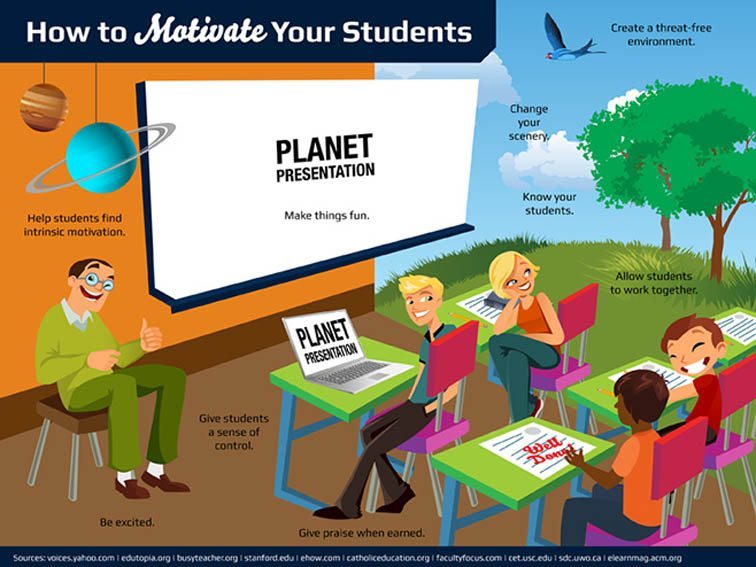
Teachers, the best way to protect your students is to have a well-managed classroom with an effective discipline plan. Students need to know that when they come to school and enter the classroom that they will be treated just like every other student, held to the same expectations and standards. A teacher must post the classroom rules on the first day of class. The rules should be simple, to be summed up in 1 sentence each, no longer than 10 words. There should be a minimum of 3 rules and a maximum of 5. You try naming all 10 of the 10 Commandments and see how fare you get, less is more.
With these rules there also has to be a discipline plan to go with them. What will happen if the student breaks the rules? Look at the plan and decide a series of progressive consequences to the choices of their actions. If you send them to the principle’s office every time they break a rule then there is no where to go. Remember a consequence can be as simple as a lack of reward, for example when grade school children have some of their recess taken away or don’t qualify for the prize at the end of the class. Teachers give students a set of rules that they can follow. Allow them the opportunity to choose to follow them or choose to accept the consequences if they don’t. Keep a running tally of who breaks the rules and when, reward improvement with praise, if it doesn’t seem to work after a few weeks change it up.
The next need that needs to be met is the need for love and belonging. The feeling of isolation is one of the largest causes of depression in the United States today. Children and Students are no exception to this feeling, in fact I would venture to guess that most adolescents have a dominant feeling and fear of isolation, which is one of the reasons that a child acts out in class. Teachers, if you have a student who is often disruptive in class or speaks out of turn, after class speak with the student and ask him or her, if they know why they feel the need to interrupt the class. If they don’t reply or give you the “I don’t know.” Simply offer a possible line of thought. ” Have you ever considered that you act out because you like the attention that you get from me and others when you interrupt class?” (Raffini pg. 30) The need for love and belonging in adolescents is so great that they will go to great lengths to be able to identify themselves as members of a larger group. This sense of belonging is often threatened in a class setting where students are forced to compete with one another to gain attention and the inclusion that they desire.
Parents, if you have a child that is rebellious ask yourself this question, “How often do I acknowledge my child when I’m not discipling him/her?” Take a hard look at things from your child’s perspective, perhaps they want to get your attention so badly that they will do whatever they can to get it. Scorn and punishment is not the worst thing that a child can suffer through, indifference is. Children need validation that they are still part of a family unit and if it is difficult to get a parent’s attention for something that they are supposed to be doing verses attention for something that they are not; then the negative behavior that wins the parents attention will win out every time. This is not to say that you should not discipline your child, by all means every person needs to learn right from wrong and how to function in society, but perhaps if they felt more of a sense of belonging in their household then they would not display such negative behavior.
The need for Self-esteem is Maslow’s final basic need. A child and student has to hold a positive image of one’s self. This esteem is developed though countless interactions between people who are significant in our lives and us. These exchanges teach all of us  whether we are worthwhile and what our value is. In order for a youth to develop a positive sense of self worth, the positive interactions with people who are substantial influencers in their lives have to out weigh the negative.
The need for self growth or as Maslow refers to it, the need for self-actualization sits at the top tier of Maslow’s Hierarchy of Needs. Only after all of the other needs are met can a person possibly be able to work on this tier. This concept includes all desires for self improvement and a person’s intrinsic drive to meet his or her full potential. However, if a person is distracted by trying to meet any or all of the other needs it is a near impossible task to achieve. Self-actualization is motivated by a person’s innate desire to be competent in what they do; all things that they do. Think about it, no one tries something new so that they can fail, people try new things with the hope and desire to be successful. If they do fail, a person who has had their basic needs fulfilled will look at the situation as a learning experience and try a different technique or practice at the task until they achieve competency. Those who do not have their basic needs met will suffer a blow tho their self-esteem or other tier needs and will either prolong a repeat of the task or avoid it all together.
Students, especially students with motivational issues will avoid tasks that they believe they are not competent at. They will try to preserve whatever they have left on one of the basic needs tiers because they are not confident in its stability. Rather than risking what they have gained and possibly loosing ground on their needs if they fail, they would avoid the risk of non-competency and not try at all. Motivation then boils down to not a lack of drive but an act of self-preservation.
 Murray's Means for Motivation